First Resume With No Work Experience: What to Include
First resume with no work experience: use education, projects, volunteering, and skills to show what you can do. Follow a simple order and example.
By Ultimate Resume Kit by Cosmo Suite · Editorial policy
Published · 9 min read
A first resume is a short record of your education and relevant experience for an early job application. Paid jobs are one possible source of evidence. Projects, volunteering, clubs, and informal work can also show what you have learned, made, organized, or handled. Start with your education and the activities that best match the job, then explain each one plainly.
A class assignment, volunteer shift, club task, or informal job can show useful skills when you describe what you actually did. The label matters: a school project is still a school project, and a volunteer role is not paid employment. Clear labels let you show relevant experience without overstating your history.
Key takeaways:
- Put education near the top when you are a student or recent graduate.
- Use relevant projects, volunteering, clubs, training, and informal work as evidence.
- Write bullets about actions and real outputs, not personality claims.
- Keep the resume to one page unless relevant material or job instructions call for more.
First resume with no work experience: what belongs
A first resume can include contact information, education, related work, skills, and optional sections such as projects or volunteering. The order depends on which parts give the best evidence for the job you want.
| If you have… | Consider adding… | Make it useful by… |
|---|---|---|
| Recent education or training | Education near the top | Naming the program, school, and completion or expected date |
| A class or personal project | Projects or Relevant Projects | Stating your role, what you made or researched, and the real output |
| Volunteer or club activity | Volunteer Experience or Activities | Naming your responsibilities and the skills you used |
| Informal or part-time work | Experience | Describing the actual task or responsibility |
| A skill from several settings | Skills | Listing it only when you can point to a real example |
CareerOneStop says school can go before work for new grads or people with recent training. Berkeley Career Engagement recommends a simple one-page format for students and recent graduates. Let the job posting and your own examples decide what earns space.
If a blank page is hard to start, one-column resume templates to edit give you a page to work from. For layout checks before upload, read this guide to an ATS-friendly resume format. A clean layout helps a reader find your evidence; it cannot replace the evidence itself.
What counts as relevant experience?
Relevant experience is a real activity that helps demonstrate a requirement in the job posting. It can come from school, a project, volunteering, or informal work, as long as you can explain your part.
Start by scanning recent work and asking: what did I do, what did I use, and what did I finish? Possible sources include:
- Coursework: a research paper, lab, presentation, group assignment, or practical exercise.
- Projects: a portfolio piece, personal build, design, repair, or event you organized.
- Volunteering: a task for a community group, school, or local organization.
- Clubs and activities: scheduling, handling equipment, coordinating members, or publishing updates.
- Informal work: tutoring, babysitting, family-business help, deliveries, or other work you performed.
- Training: relevant courses or certificates, marked completed or in progress.
Indeed's guidance includes projects, volunteering, internships, clubs, and informal work. The UC San Diego Career Center says unpaid or volunteer work can appear as experience when it is relevant. The useful question is not whether an activity sounds important. It is whether it gives you a real example of a skill the job needs.
Skip activities that do not help explain your fit, and do not add a skill just because it appears in the job ad. If the employer asks for spreadsheets, list spreadsheet skills only if you have used them. One class project with a clear output can say more than a long list of traits.
Choose a section order that fits your evidence
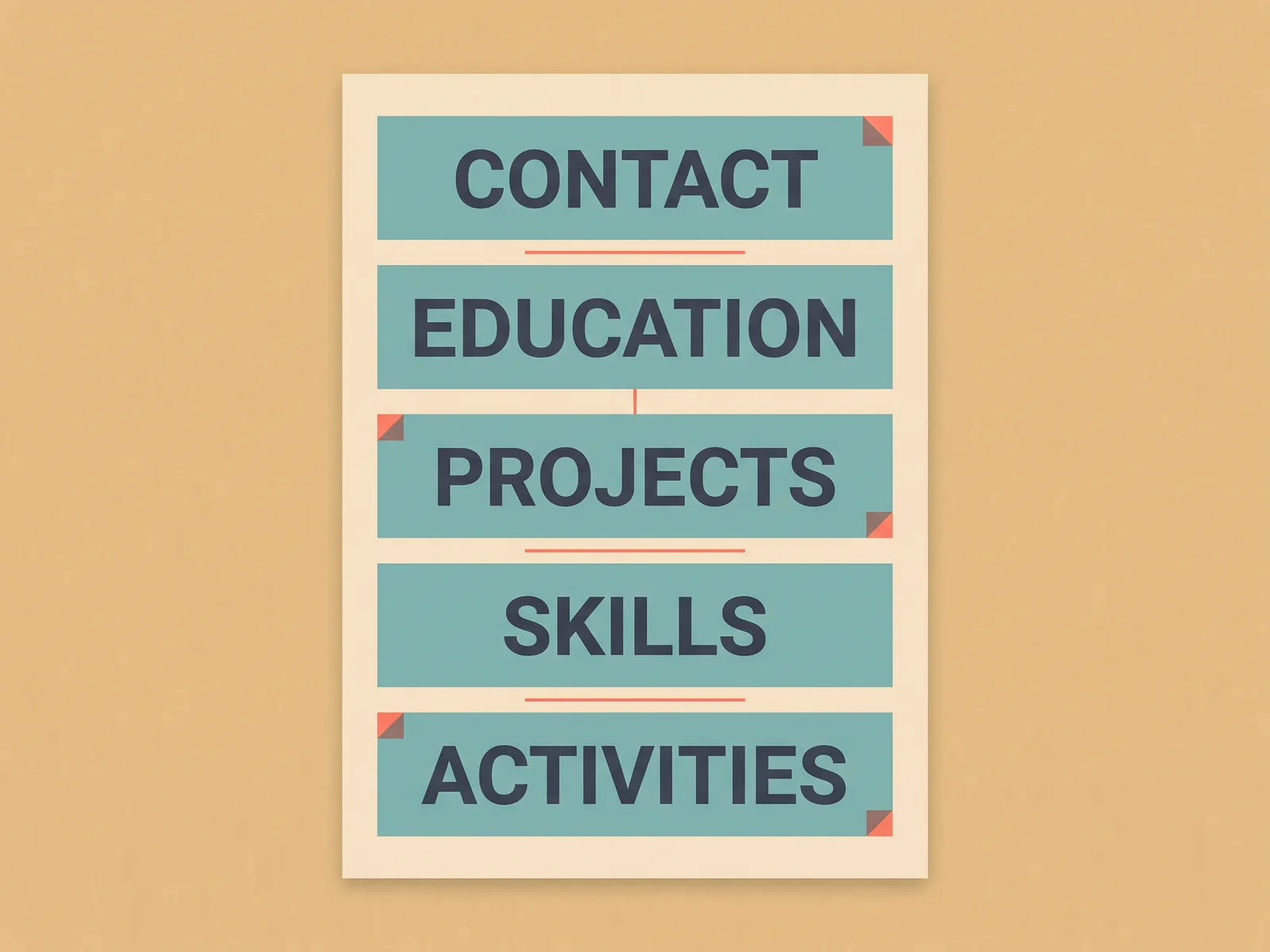
Put your best evidence where a reader can find it quickly. For many students, that means education first, followed by projects or relevant experience, then skills and additional activities.
A simple starting order is:
- Name and contact details: use an email address and phone number you check.
- Education: list the school or program, credential, and expected or completed date. Add coursework only when it supports the job.
- Projects or relevant experience: use the heading that best describes the work. Include paid, unpaid, academic, or personal activity under an accurate label.
- Skills: choose practical skills in the job requirements that your examples support.
- Other activities: include volunteering, clubs, awards, or languages when they help explain your fit.
CareerOneStop's format guide says recent grads can place school before work and include related classes or training. It also advises clear headings and a simple layout. The UC San Diego Career Center resume guide recommends giving relevant projects their own entry when they show useful skills or knowledge.
You do not need a summary just to fill space. If a short introduction helps, name the role and the proof you bring. Avoid claims such as “hard-working” unless the resume shows what that means in practice.
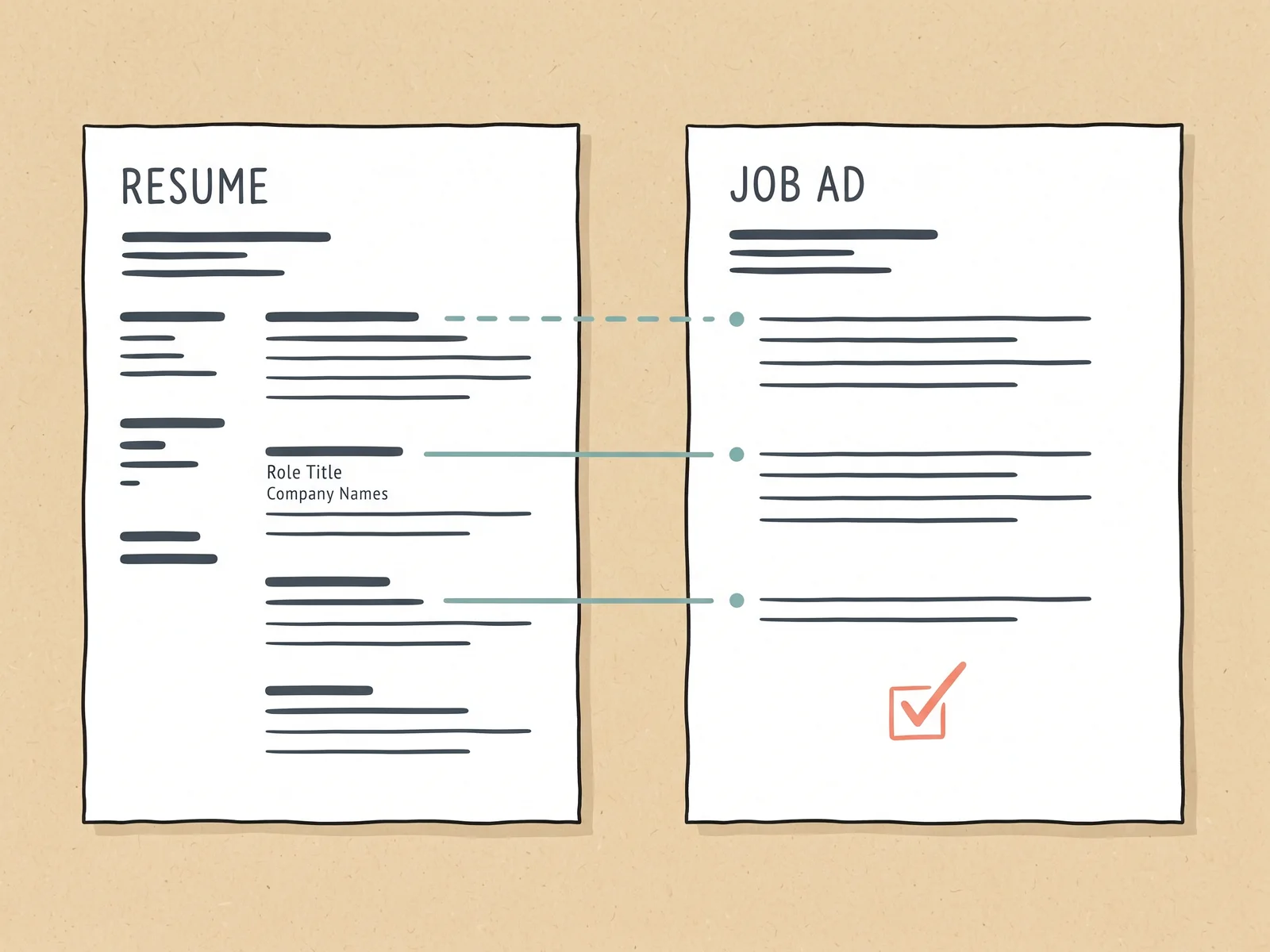
Before drafting, make a small evidence map. Put a requirement from the job ad in the first column, the real activity that supports it in the second, and a concrete task or output in the third. This keeps a skills section tied to examples instead of turning it into a list of claims.
| Job requirement | A real source to check | What you can describe |
|---|---|---|
| Clear communication | Class presentation, tutoring, club updates | A message, explanation, or presentation you prepared |
| Organization | Volunteer setup, group project, family task | A schedule, materials, or handoff you managed |
| Basic research | Coursework or a personal project | The question, sources, and summary you produced |
These are prompts for finding your own examples, not claims about a typical applicant. Keep only rows that match your history and the role.
Turn an activity into a clear resume bullet
A resume bullet is a short statement of an action and the work or result that came from it. It gives a clearer picture than a skill name alone.
Try this prompt:
Action + what you worked on + output, purpose, or method
For example, a fictional student applying for an office assistant role might write:
- Too broad: “Good at organizing and communication.”
- More specific: “Coordinated a class presentation by dividing research topics, combining slides, and preparing the final file with the group.”
This is fictional wording, not a claim about a real applicant. Replace the details with work you actually did. If there was no measurable result, do not add a number. Describe the real deliverable instead, such as a presentation, schedule, written report, event plan, or completed task.
UC San Diego suggests an action, task, and purpose or result structure for bullets, and advises using numbers when they are meaningful. If you cannot verify a count, leave it out. A precise description is better than a made-up metric.
Ask yourself: “What did I personally do?” and “What can I point to?” If a bullet only names a trait, rewrite it to show a task. If it claims a result you cannot support, remove the result.
A fictional first resume, filled in
This example shows how a student with no paid employment could arrange real types of evidence. The person and details are fictional. Treat the wording as a pattern, not as a credential or achievement to copy.
Jordan Lee
jordan.lee@email.example | 555-0100 | City, State
Education
High School Diploma, expected June 2027
Northside High School
Relevant coursework: Business Communications
Relevant Project
Class presentation on customer service
- Researched common ways to resolve a customer question using course materials.
- Combined the group's notes into a clear slide presentation.
- Presented the final work with classmates.
Volunteer Experience
Community event helper | Local neighborhood group
- Prepared sign-in materials before the event.
- Directed visitors to the correct activity area.
- Returned shared materials after the event.
Skills
Google Docs, presentation slides, written communication
The example is fictional and does not promise that an applicant will be hired. It shows how to name the source of experience, describe the work, and keep the scope honest. If coursework is your clearest evidence, put it below Education. If volunteer work relates more closely to the role, it can come first under Relevant Experience.
Tailor the evidence to each job posting
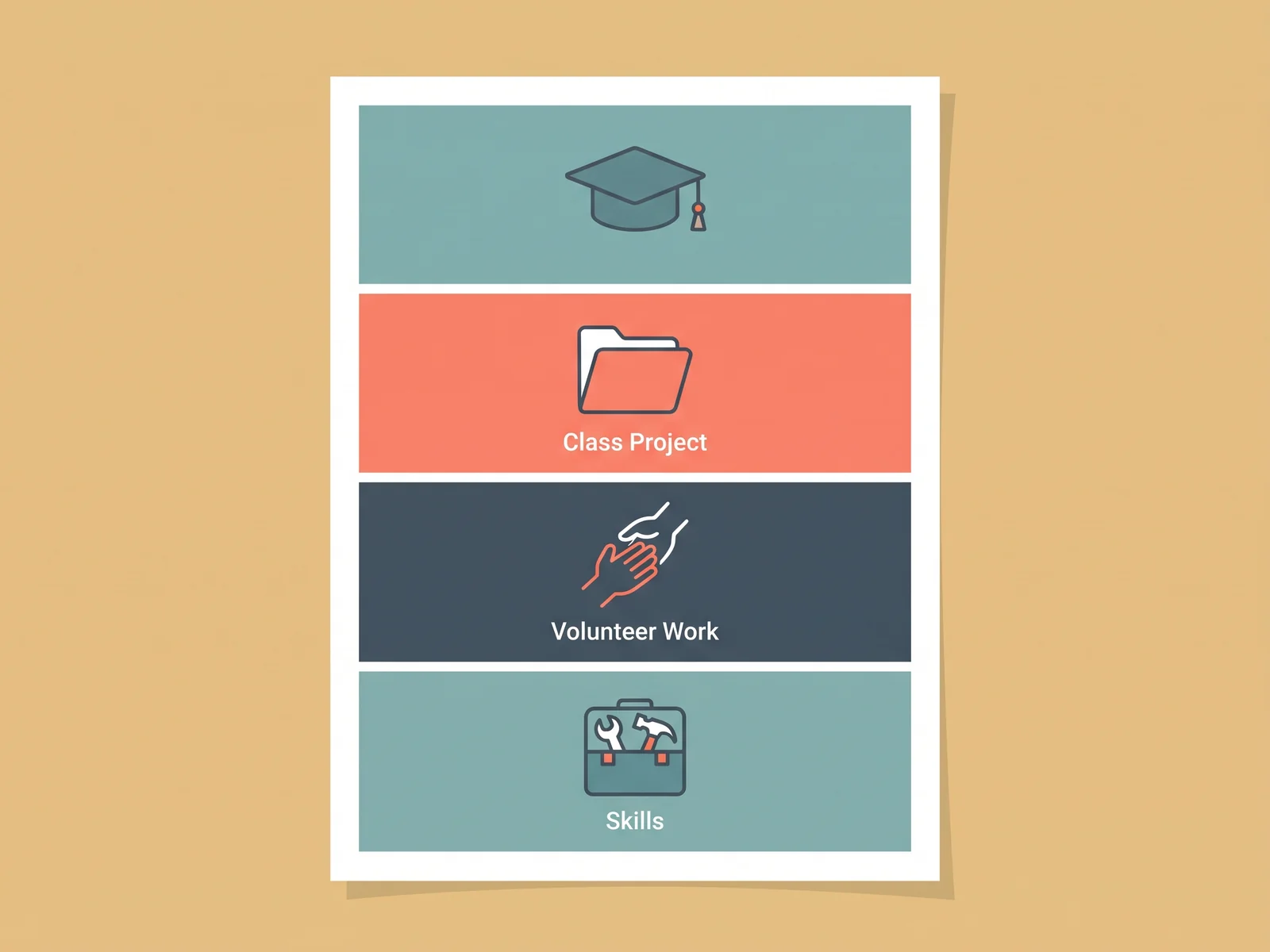
Tailoring means selecting and describing your real evidence so the connection to a particular role is clear. It does not mean copying every keyword or turning a class project into paid work.
Read the posting and mark tasks, tools, and requirements you can support. Choose examples that match those needs. If the listing asks for customer communication and accurate records, a real volunteer sign-in task may support the first point, while documented research notes from a class project may support the second.
Use the employer's terms when they fit what you did. If the posting says “inventory,” use that word only if you handled stock or records. If you helped a club track borrowed equipment, describe that accurately instead of calling it inventory management unless that is what the task involved.
Keep a base version with your full, truthful history, then select relevant items for each application. Read the final document beside the posting and check that every named skill has an example somewhere on the page. If you want one consistent page as you tailor each copy, one-page and two-page resume templates for Word, Google Docs, and Pages give you files to edit.
For more examples of describing a timeline accurately, see how to explain an employment gap on a resume. That guide also covers how to avoid inventing work or sharing private details you do not want to disclose.
Is a two-page resume okay for a fresher?
Usually, a student or recent graduate with limited experience should start with one page. Berkeley Career Engagement says most student and recent-graduate resumes should fit on one page when experiences are described clearly and concisely.
A second page can make sense when your related work needs the room, or when an application asks for a longer record. Do not shrink text or remove readable spacing just to force everything onto one page. First remove repeated details, unrelated activities, and skills that do not support the role.
CareerOneStop gives a broader one-to-two-page range. It says to use two pages only when your work calls for it. Keep the resume as short as you can while keeping useful examples, and follow any instructions in the job posting.
Check the details before you send it
Before submitting, check the resume against the job instructions and check details that are easy to miss.
- Confirm your name and contact information are current.
- Check the spelling of schools, programs, dates, and tools.
- Make sure every bullet describes something you actually did.
- Remove unsupported numbers and claims.
- Use consistent dates and standard section headings.
- Follow the employer's requested file format and naming instructions.
- Open the exported file and check its order, spacing, and page breaks.
If you export a PDF, select and copy a sentence to confirm that the words are text rather than a flat image. Then upload the file and review any fields the application fills in. This is a formatting check, not a test score or a guarantee about how an employer's system will process the resume.
Where Ultimate Resume Kit fits
A template can give you a page structure to edit, while the examples and details still need to come from your own experience. The Ultimate Resume Kit includes one-page and two-page resume templates in Word, Google Docs, and Pages, plus a PDF writing guide.
The guide includes a section on a first resume, with ideas for education, projects, skills, and experience outside paid work. You replace its sample text with your own details. The resume kit and its listed contents also include a matching cover-letter template and references page.
Check the file formats and sizes against each job's instructions. A template cannot verify your experience, choose what to disclose, or predict an employer's decision.
Why Trust This Article
This article compares guidance from Indeed, Berkeley Career Engagement, CareerOneStop, and the UC San Diego Career Center. Their recommendations support using education, related activities, and projects to show skills when paid experience is limited. Advice varies by student, program, and employer, so application instructions and your own facts still matter.
The example resume is fictional and clearly labeled. Its details illustrate structure only; they are not a real applicant, tested result, or hiring outcome. We checked the cited sources on 28 October 2026.
A first resume can be brief and still specific. Start with evidence you can explain, label it accurately, and keep only details that help a reader understand your fit.
Frequently asked questions
What should I put on my resume if I have no work experience?
Start with contact details, education, and relevant evidence: projects, volunteering, clubs, informal work, or training. Explain what you did and connect it to the job. Include only details you can discuss truthfully.
How do I write a first resume with no experience?
Read the job posting, choose requirements you can support with real examples, then order your education and activities around that evidence. Use clear headings, short bullets, and tailor the examples for each application.
Should I include school projects on a resume?
Yes, when a project shows a skill or knowledge related to the job. Name the project, your role, what you completed, and any real output. Label class work accurately.
Should I include volunteer work if I have no job experience?
Include volunteer work when it demonstrates relevant responsibilities or skills. Describe the work itself and what you handled. It does not need to be presented as paid employment.
Is a two-page resume okay for a fresher?
Usually, one page is a practical starting point for a student or recent graduate with limited experience. Berkeley Career Engagement says most student and recent-graduate resumes should fit on one page; use a second only when relevant experience needs the space or instructions require it.
What if I have no projects or volunteer experience?
Look for relevant coursework, presentations, club responsibilities, informal work, or personal projects you completed. If none fit the role, keep the resume brief and focus on education and verified skills instead of inventing experience.